November 16, 2026 · TermBridge · 4 min read
Watch Iterative Data Experiment Loops from Your iPhone

Iterative data work means running an experiment, reading the result, adjusting a hypothesis, and running again. On a messy enterprise data estate, each loop can take a long time. The person driving it either sits at the Mac waiting for output or walks away and loses track of which run finished and which one stalled.
The nature of data work is iterative: investigate, form hypotheses, experiment, and improve based on what you learn. This bottom-up process is the only way to deliver meaningful outcomes quickly in large, messy enterprise data environments.
That line comes from the Show HN post for Kapso, an open-source engine from the Leeroo team that runs experiments, deploys the best solution, and learns from every run. TermBridge fits the human side of that loop. It mirrors the exact shell you already use on your Mac, whether that is iTerm2, Terminal.app, a VS Code, Zed or Cursor integrated terminal, or a tmux session, onto your iPhone or iPad. You can read the experiment logs as they stream and type into the same session. Traffic is end-to-end encrypted with X25519 and AES-256-GCM, so the relay only sees ciphertext, which matters when the output contains enterprise schema names and sample rows.
Follow each experiment without babysitting the desk
The OP describes a migration project moving a company off its old data estate. Work like that produces long chains of runs: profile a table, test a mapping, validate counts, repeat. Start the loop in a tmux session on your Mac, pair your phone by scanning the QR code and approving it on the Mac, and check the scrollback between meetings. You see the same lines the Mac sees, so a failed row-count check or a schema mismatch is visible the moment it prints, not an hour later when you return.
Answer the prompts that block the next hypothesis
Agent-driven investigation still stops for people. A Claude Code or Codex session working through the data might ask to run a query against a production replica or confirm a transformation before writing files. If nobody answers, the whole iterative chain sits idle. From the phone you can read the request, check the preceding output, and type the reply into the live shell. The next experiment starts instead of waiting for you to get back.
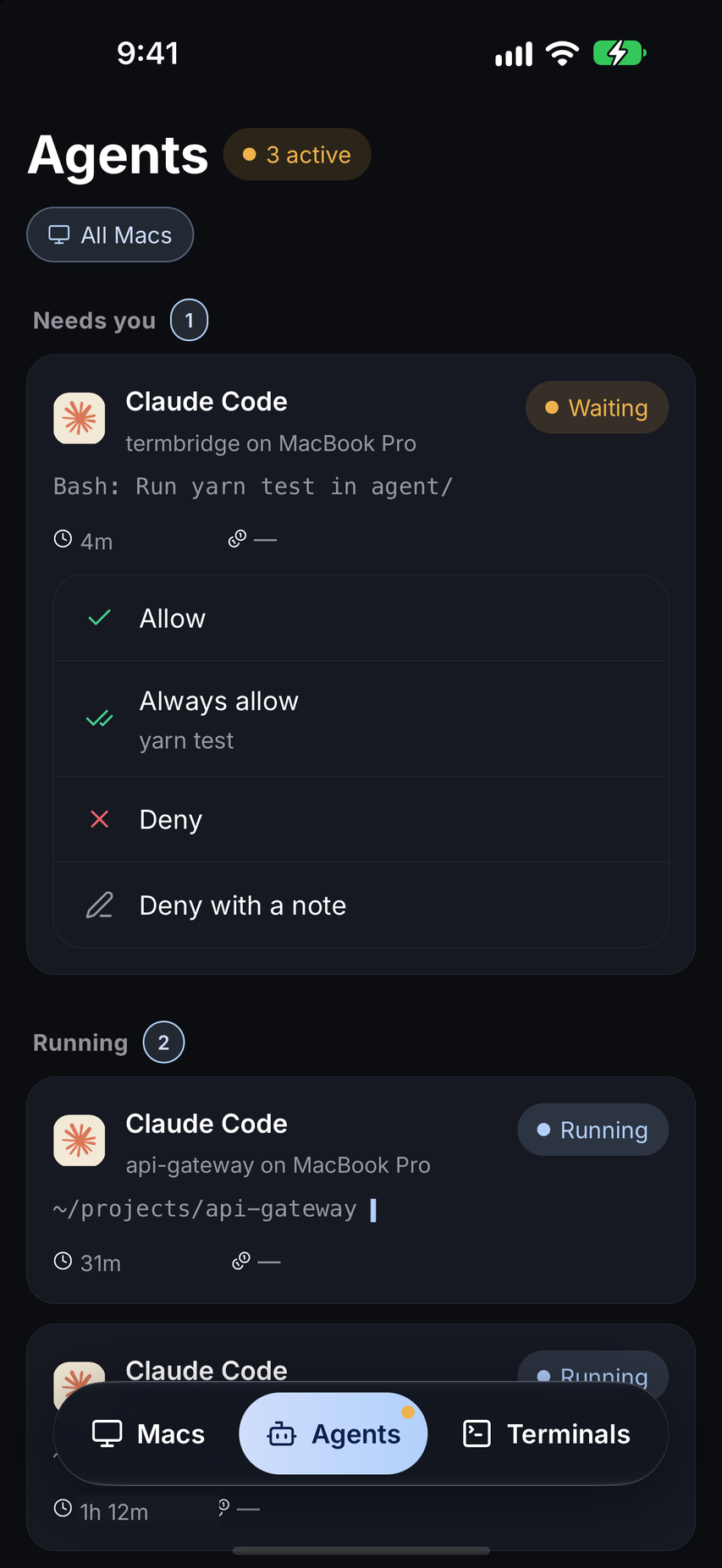
If your loop runs inside sandboxed environments, the approach in monitoring Claude Code’s isolated container runs applies the same way.
Keep separate runs on separate machines straight
Kapso’s pitch is compounding learning across investigations, which in practice means several workstreams going at once. One Mac might hold the legacy warehouse profiling while another runs the new pipeline validation. TermBridge lets you pair multiple devices to one Mac and switch between multiple Macs from the same phone. A teammate on an iPad can watch the validation runs while you watch profiling, both looking at the real terminals rather than screenshots pasted into chat.
Discussed on Hacker News · 61 pts · 13 💬